

Contactless Medicine vs Telemedicine
Why healthcare needs more than video calls.
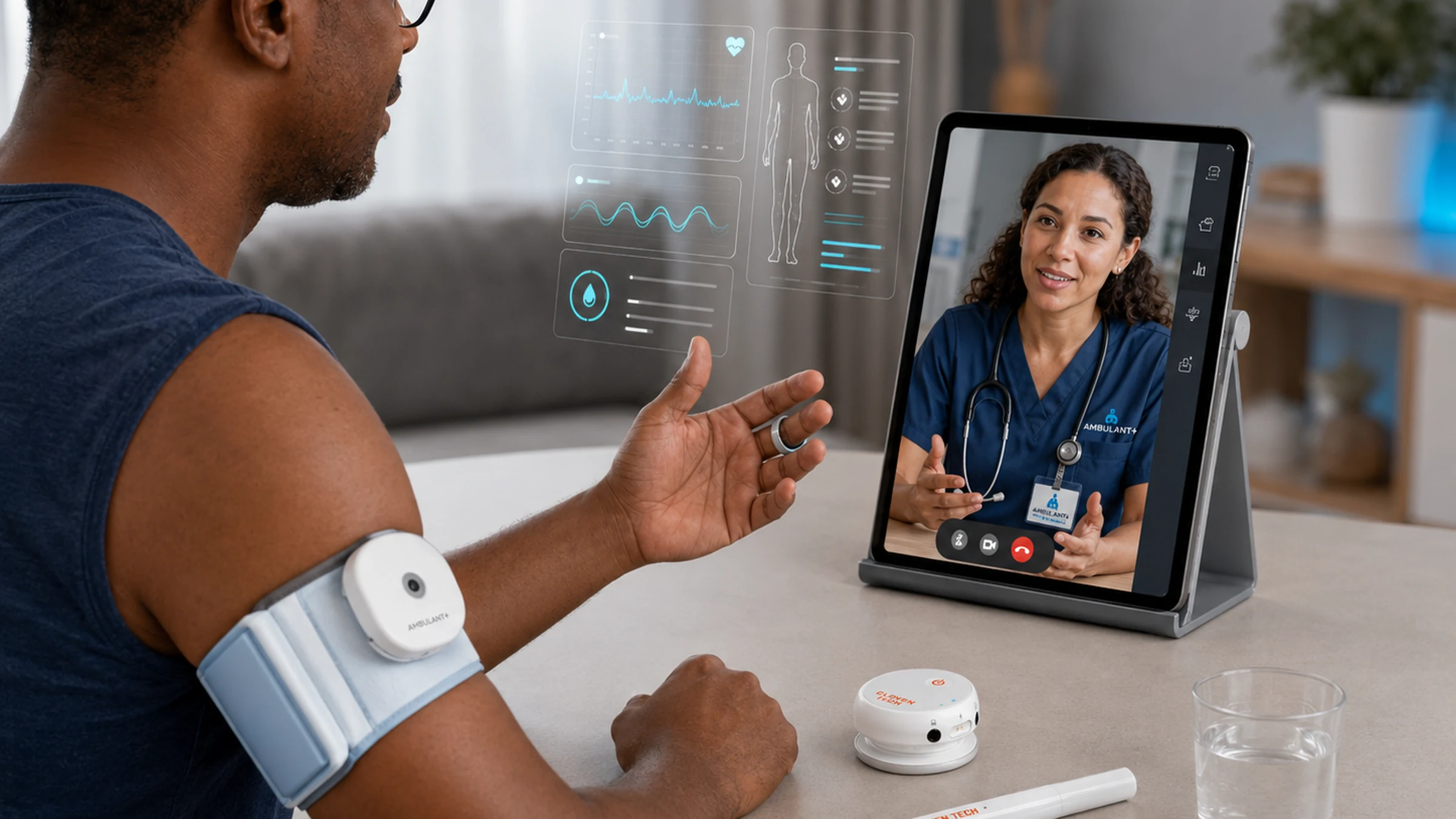
Telemedicine improves access, but Contactless Medicine adds connected devices, remote monitoring, diagnostics, pharmacy fulfilment, adherence intelligence and governance-aware care workflows.
The difference in one sentence
Telemedicine connects people remotely. Contactless Medicine connects care remotely.
That distinction matters. A video call can help a patient access a clinician, but healthcare is not only conversation. Good care may require vital signs, clinical history, diagnostic testing, medication access, adherence support, documentation, escalation and follow-up.
What telemedicine usually solves
Telemedicine is useful because it reduces distance. A patient can speak with a doctor from home, work, a rural area or another convenient location. For minor conditions, follow-up conversations and simple care navigation, this can be valuable.
But the limitation appears when the consultation needs objective context. A clinician may need to know the blood pressure, oxygen saturation, temperature, glucose level, heart sounds, lung sounds, ear findings, medication history or recent diagnostic results. When those elements are missing, remote care can become over-dependent on patient self-reporting.
Telemedicine improves access.
Telemedicine reduces travel and waiting time.
Telemedicine supports simple follow-up and advice.
Telemedicine may become limited when objective clinical data is needed.
What Contactless Medicine adds
Contactless Medicine adds the missing infrastructure around the consultation. Ambulant+ does this by connecting device-supported review, patient profile readiness, home diagnostics, CarePort pharmacy fulfilment, MedReach laboratory coordination, medication reminders, camera verification where enabled and InsightCore programme intelligence.
This makes remote care more useful for primary care, chronic disease, post-discharge follow-up, preventive care, holistic care, fertility pathways, family care, medical-aid programmes and corporate health benefits.
Remote vitals and continuous remote monitoring signals.
Digital auscultation through a Digital Stethoscope.
Selected visual review through an HD Otoscope.
Medication adherence scoring and eRx-linked reminders.
Home diagnostics and home phlebotomy through MedReach.
Pharmacy fulfilment and last-mile medicine delivery through CarePort.
Why device-supported care changes the remote consultation
The presence of integrated medical hardware changes the quality of the consultation. A doctor does not have to rely only on what the patient says. Depending on the workflow, the clinician may see vitals, device readings, sound recordings, image captures or longitudinal trend context.
This does not mean every patient can be managed remotely. It means remote care can become more clinically informed when it is appropriate. It also means there can be clearer escalation when the available data suggests the patient needs urgent, emergency or in-person care.
Why governance matters
The more powerful a digital health platform becomes, the more governance matters. Contactless Medicine needs role-based access, consent-aware data sharing, audit trails, clinical disclaimers, professional judgement and careful boundaries around device data.
Ambulant+ is designed to support this kind of governed deployment, especially where medical aids, HMOs, employers, pharmacies, laboratories and clinical networks need accountable workflows rather than isolated app interactions.
Is telemedicine still useful?
Yes. Telemedicine is useful for access and communication. Contactless Medicine builds on telemedicine by adding devices, diagnostics, fulfilment, adherence and governance layers.
Why does remote care need connected devices?
Connected devices can provide objective context such as vitals, auscultation, imaging or longitudinal trends, helping clinicians make better-informed decisions when remote care is appropriate.
Can Contactless Medicine support primary care?
Yes. Contactless Medicine can support primary care workflows where remote review is appropriate, while still escalating patients to in-person or emergency care when needed.