

Why Medical Aids Should Invest in Remote Patient Monitoring
The economics of prevention, adherence and earlier intervention.
Remote patient monitoring helps medical aids, HMOs and sponsors identify risk earlier, support chronic-care continuity, improve adherence and reduce preventable high-cost complications.
The economic problem medical aids already understand
A member is rarely expensive at the beginning. The cost often arrives after missed appointments, poor monitoring, uncontrolled chronic disease, delayed diagnostics, medication non-adherence and late intervention. By the time complications require hospitalisation, surgery, dialysis escalation, amputation or intensive care, the cost may exceed what can reasonably be recovered from that member.
This is why preventive care matters. Medical aids, HMOs and corporate sponsors do not fund wellness because it sounds attractive. They fund it because healthier members live longer, remain engaged, use benefits more appropriately and avoid catastrophic cost events where possible.
Why access alone is not enough
A medical aid may already cover a consultation, but that does not mean the member attends. Transport, time, pharmacy access, laboratory access, fragmented records and weak follow-up can still break the care journey.
Video-only telemedicine does not always solve this. A member with hypertension, diabetes, respiratory disease, pregnancy-related concerns or post-discharge risk may need more than conversation. They may need remote vitals, continuous monitoring, diagnostic testing, medication fulfilment and adherence visibility.
What remote patient monitoring changes
Remote patient monitoring makes risk more visible between formal care events. Instead of waiting for a member to deteriorate and present late, a programme can monitor signals such as blood pressure, glucose, oxygen saturation, heart-rate trends, sleep, activity, temperature variation, medication adherence and care engagement where the member grants permission.
Ambulant+ supports this through connected devices, patient profiles, Health Passport, medication reminders, CarePort fulfilment, MedReach diagnostics and InsightCore programme visibility.
Vitals spot checks and remote vitals workflows.
Continuous remote monitoring through longitudinal signals where configured.
Medication adherence scoring and camera verification where enabled.
Home diagnostics and laboratory result routing.
Pharmacy fulfilment and proof-of-delivery visibility.
Claims preflight, coverage rules and programme reporting.
Medication adherence is a payer problem
Medication non-adherence is not just a patient behaviour issue. It becomes a payer economics issue when chronic disease worsens, complications occur and avoidable admissions follow.
Ambulant+ can support eRx-linked reminders, dose behaviour tracking, camera verification where enabled, adherence scoring, refill continuity and CarePort medicine delivery. This creates a stronger basis for intervention and reward design.
Why medical aids need programme intelligence
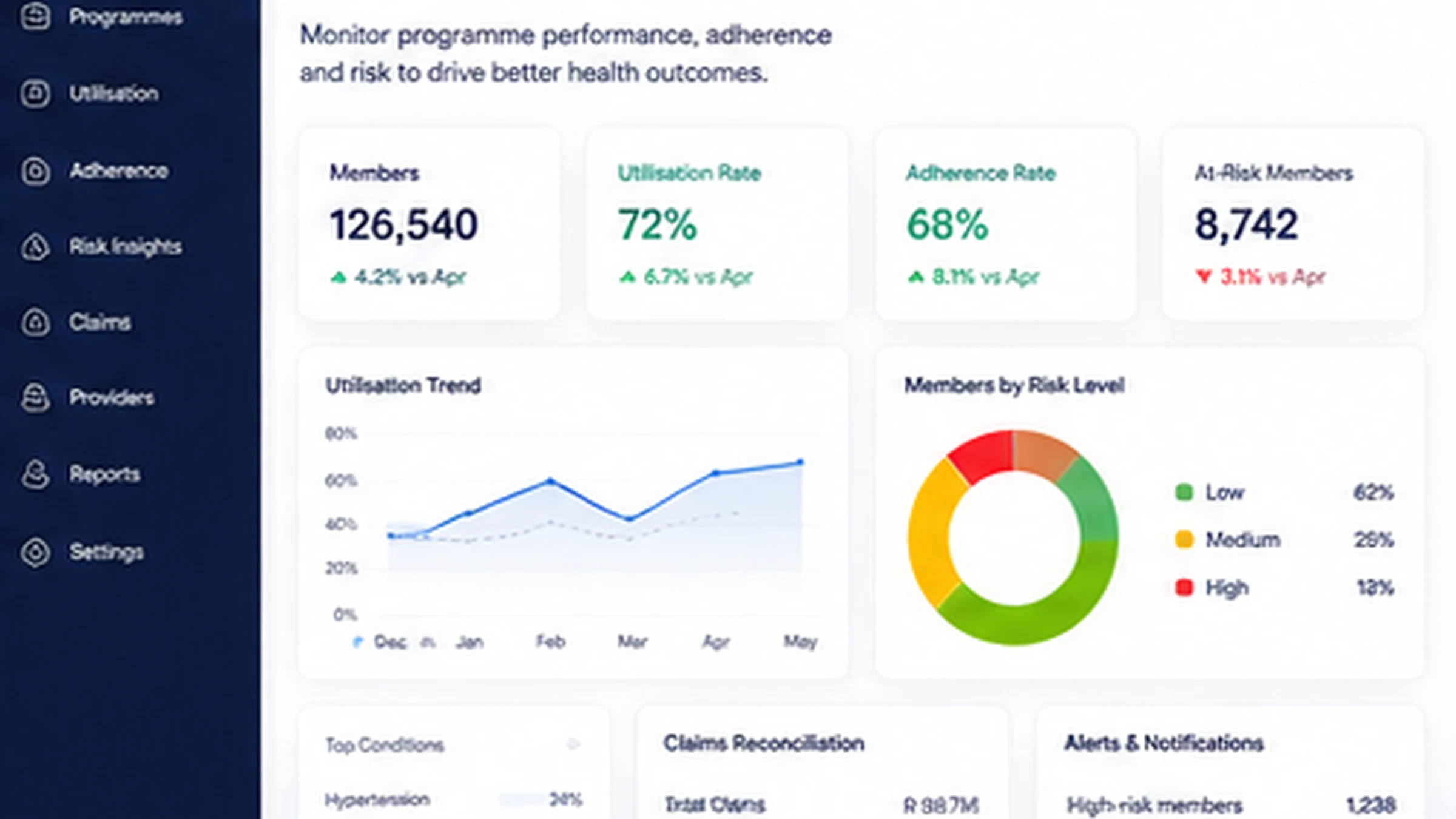
Funding benefits without measuring behaviour makes prevention difficult to prove. InsightCore is designed to help programme teams see utilisation, adherence, remote monitoring trends, risk movement, reward eligibility, claims posture and operational performance.
The goal is not to expose unnecessary patient-level detail. The goal is consent-aware, role-based and purpose-specific visibility so that the right teams can act earlier while protecting privacy and governance boundaries.
The Ambulant+ opportunity for payers
For medical aids, HMOs, insurers, employers and sponsors, Ambulant+ can connect consultation funding, remote monitoring, home diagnostics, medicine fulfilment, rewards, claims reconciliation and programme intelligence in one operating layer.
That makes preventive care more measurable, more fundable and more operationally accountable.
Why should medical aids fund remote patient monitoring?
Remote patient monitoring can help identify risk earlier, support chronic-care continuity, improve adherence and reduce avoidable high-cost complications where earlier intervention is possible.
Can Ambulant+ support medication adherence programmes?
Yes. Ambulant+ can support eRx-linked reminders, camera verification where enabled, adherence scoring, refill continuity and CarePort medicine fulfilment.
Can medical aids see patient data?
Visibility should be consent-aware, role-based and purpose-specific. Medical aids may need claims, authorisation and clinical-context visibility, while employers should generally receive aggregated or permissioned programme visibility.