

Continuous Vitals Monitoring for Chronic Care
Why chronic disease programmes need trend visibility, not isolated readings.
Continuous vitals monitoring and structured remote patient monitoring can help chronic-care programmes detect deterioration earlier, improve follow-up and support clinician-led intervention.
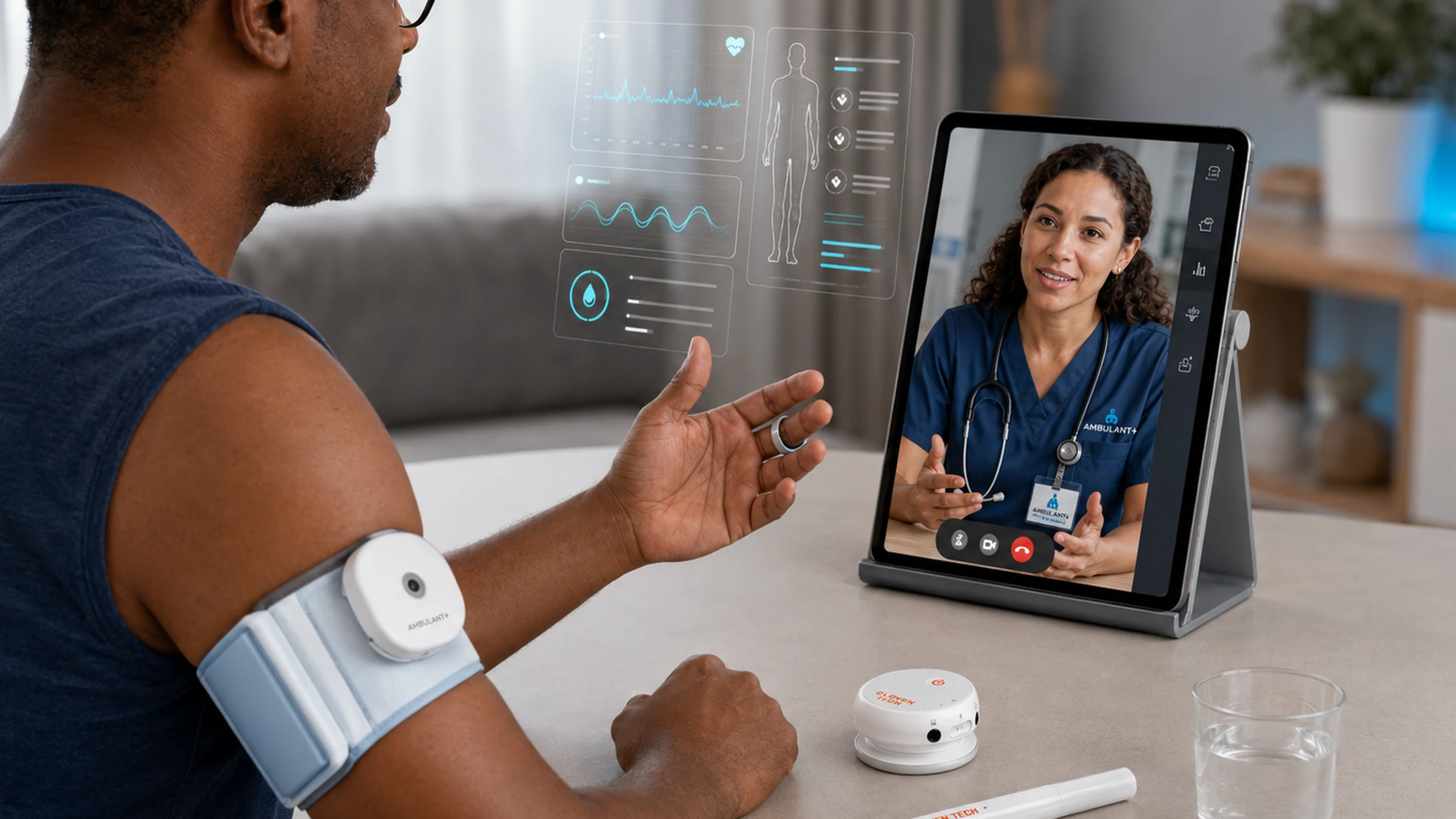
Chronic disease happens between appointments
A patient with hypertension, diabetes, respiratory disease or cardiovascular risk may appear stable during one appointment but deteriorate between formal reviews. This is one reason chronic-care programmes need better visibility beyond the clinic visit.
Continuous vitals monitoring and structured spot checks can help reveal trends earlier. The purpose is not to flood clinicians with data. The purpose is to identify meaningful change and support timely action.
What continuous monitoring can add
Continuous remote monitoring may include longitudinal signals such as heart-rate patterns, sleep, readiness, temperature variation, activity trends and adherence behaviour. Spot checks may include blood pressure, glucose, SpO₂, temperature, ECG context or other supported measurements.
When organised properly, these signals can help care teams detect risk, prepare consultations and personalise follow-up.
Better visibility of blood pressure and glucose control patterns.
Earlier recognition of oxygen saturation concerns where relevant.
Sleep, activity and recovery context for holistic care.
Medication adherence context linked to clinical outcomes.
More informed chronic-care reviews and follow-up planning.
Why charts and flags matter
Raw numbers are not enough. Patients and care teams need organised charts, out-of-range guides, flags, summaries and workflow rules. Without structure, monitoring can become confusing instead of useful.
Ambulant+ is designed to support a more structured Health Passport approach, where patient data can be organised into meaningful care context.
A safer model for escalation
Remote monitoring must have safe escalation boundaries. Some readings may require repeat measurement. Others may require clinician review. Some should trigger urgent or emergency advice.
The platform should make this distinction clear and should never present monitoring as a substitute for emergency care.
Why funders should care
For medical aids and sponsors, chronic disease complications can create high-cost claims that may have been preventable with earlier intervention. Continuous vitals monitoring can support earlier detection, better adherence and more accountable preventive-care programmes.
The goal is longer member healthspan, fewer avoidable complications and stronger evidence that preventive benefits are being used effectively.
Is continuous vitals monitoring useful for chronic disease?
Yes. It can support trend visibility, earlier risk detection and more informed clinical follow-up when used inside a governed care pathway.
Does remote monitoring replace clinic review?
No. Remote monitoring supports care continuity but does not replace in-person review, urgent assessment or emergency care where required.
What data can chronic-care programmes use?
Depending on consent and configuration, programmes may use vitals, adherence, activity, sleep, diagnostics, consultation summaries and claims-related workflow data.