

Why Live Auscultation Matters During Virtual Consultations
Video can show the patient. Digital auscultation helps the clinician hear what matters.
Live auscultation during virtual consultations can support remote review of asthma, COPD, pneumonia, heart symptoms and treatment response by allowing clinicians to capture, replay and compare heart and lung sounds.
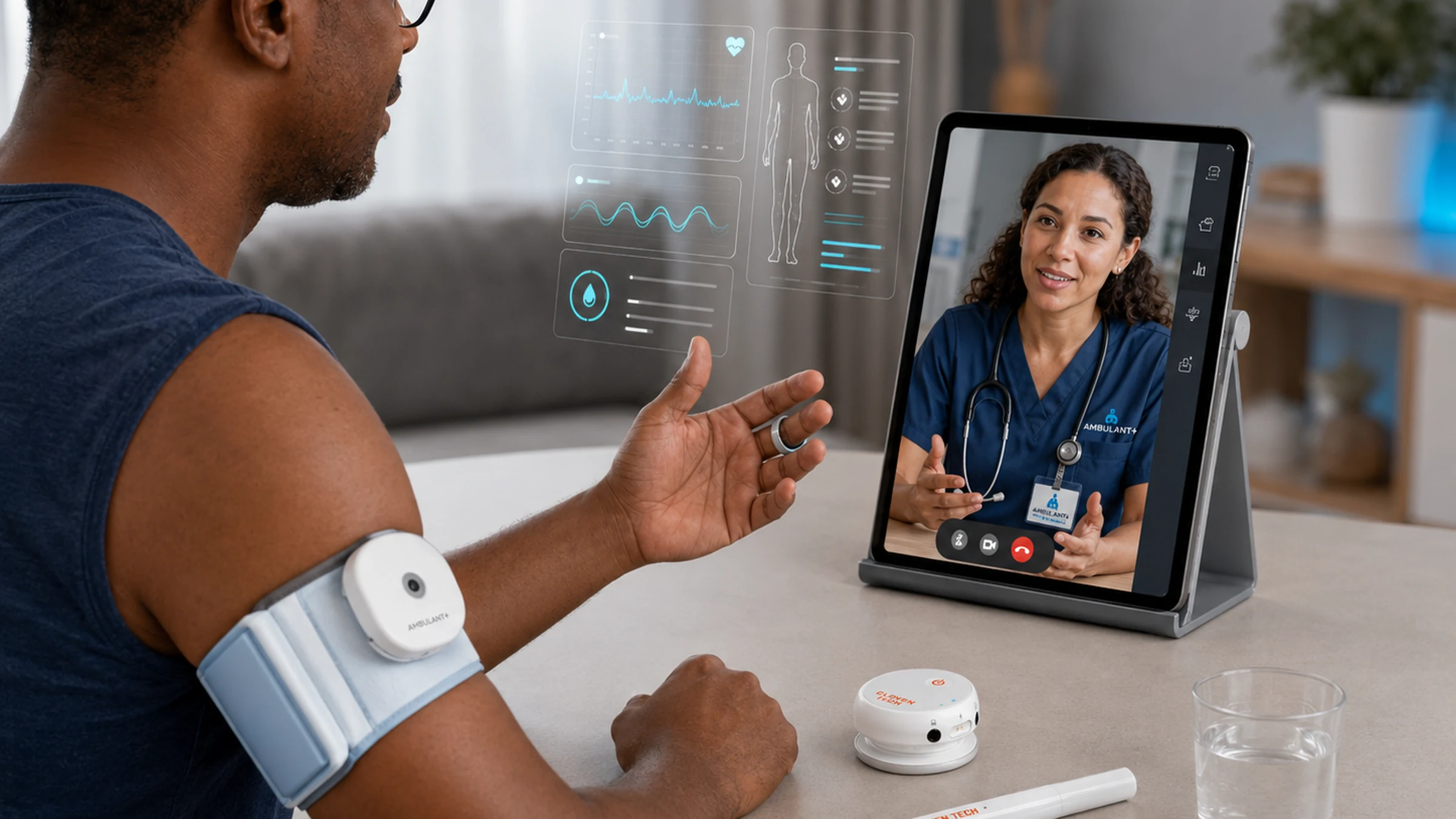
The missing sound in ordinary video consultations
A video call can show the clinician how a patient looks. It can show breathing effort, posture, colour, distress and interaction. But it cannot, by itself, let the clinician hear the chest.
That matters because many important clinical questions are not only visual. Is the wheeze improving? Is air entry reduced? Are there crackles? Is a chest infection responding? Are new sounds appearing? Does the patient’s story match what the clinician can hear?
This is where live digital auscultation becomes one of the clearest differences between ordinary telemedicine and device-supported Contactless Medicine.
Asthma: hearing response, not just asking about it
In asthma care, the patient’s symptoms matter, but symptoms alone may not tell the full story. A patient may say they feel better while still having audible wheeze. Another may feel anxious and breathless but have improving air entry after treatment.
With a Digital Stethoscope, a clinician can review lung sounds during a virtual consultation, document the finding and compare it with later recordings where appropriate. This is especially useful when monitoring response to inhalers, steroids, nebulised therapy or a new treatment plan.
COPD: tracking change across an exacerbation
COPD patients often know their baseline better than anyone, but exacerbations can progress subtly. Cough, sputum change, breathlessness, oxygen saturation, activity reduction and chest sounds all matter.
Live auscultation gives the clinician another layer of remote context. Saved audio files can also help compare the patient’s chest sounds from the first day of treatment to the final review. That comparison can support a more informed decision about whether symptoms are resolving, persisting or worsening.
Pneumonia: remote follow-up with more clinical context
Pneumonia often requires careful follow-up. Some patients improve quickly, while others remain breathless, febrile, weak or clinically concerning. A remote review that includes symptoms, temperature, oxygen saturation and auscultation is more informative than a conversation alone.
Digital auscultation does not remove the need for in-person examination, imaging, emergency care or escalation where clinically required. But it can support selected follow-up reviews and help clinicians decide whether the patient is improving as expected.
Heart sounds: a remote clue, not a remote shortcut
Heart auscultation can also be useful in selected virtual workflows. A patient with palpitations, known murmur, suspected fluid overload or cardiac follow-up needs more than a generic video call.
Digital heart-sound capture may support clinician review, comparison and documentation. It must still be interpreted responsibly. Remote auscultation should never be presented as a replacement for ECG, echocardiography, emergency assessment or specialist review when those are indicated.
Why playback changes the clinical conversation
The ability to save and replay audio files is powerful. In traditional care, a clinician hears the chest at one moment in time. In a digital workflow, the clinician may compare sound recordings across a treatment period.
That means day-one wheeze, mid-treatment improvement and end-of-treatment resolution can become part of the patient’s care story. This is especially valuable for chronic respiratory disease, recurrent symptoms and remote monitoring programmes.
Playback supports comparison over time.
Saved WAV files can support documentation.
Different clinicians can review the same recording where governance allows.
Patients can be followed without every review requiring travel.
The safe position: more context, not automatic diagnosis
Digital auscultation should be positioned carefully. It supports clinician-led review; it does not automatically diagnose the patient. It adds useful remote clinical context; it does not eliminate the need for emergency care or physical examination when required.
Used properly, however, it makes virtual care more clinically serious. It helps the clinician hear, compare and act with better information.
Can a Digital Stethoscope be used during a virtual consultation?
Yes. A Digital Stethoscope can support selected virtual consultations by allowing heart and lung sound capture for clinician review.
Can saved auscultation recordings be compared over time?
Yes. Saved audio recordings can help clinicians compare heart or lung sounds from earlier and later points in a treatment pathway where the workflow supports this.
Does digital auscultation replace physical examination?
No. Digital auscultation adds remote clinical context, but it does not replace in-person examination, emergency care or specialist investigation when required.