

Remote Jobs, Rural Living and the Healthcare Access Gap
Remote work is making city migration less compulsory. Now healthcare must catch up.
Remote jobs are changing urban-rural migration patterns, but healthcare access remains a major reason people still feel forced into cities. Contactless Medicine can help make rural, peri-urban and smaller-town living safer and more realistic.
The old bargain of city migration is changing
For a long time, young professionals and ambitious families were told that opportunity lived in the city. Move closer to the office. Move closer to the hospital. Move closer to the specialist. Move closer to the systems that make life work.
But the cost of that bargain has become harder to ignore. High rent, long commutes, pollution, traffic, loneliness, overcrowded clinics, expensive transport and fragmented support networks have made city migration less attractive for many people.
Remote work has changed one side of the equation. A person can now earn from a smaller town, a rural community, a family home or a quieter peri-urban environment. The question is whether healthcare can become just as location-independent.
Healthcare is one of the last reasons people still feel forced into cities
Even when work becomes remote, healthcare often remains centralised. Patients still travel for consultations, monitoring, prescriptions, diagnostic tests and follow-up. For people with chronic conditions, children, elderly parents or pregnancy-related care needs, this can become a permanent reason to remain close to urban medical infrastructure.
This is the healthcare access gap that ordinary video calls alone cannot solve. A video consultation may help with conversation, but many patients also need vitals, auscultation, diagnostics, medicine continuity and structured follow-up.
A young professional may be able to work remotely but still travel for chronic-care reviews.
An elderly parent may need blood pressure checks, medicine delivery and home phlebotomy.
A pregnant woman may need structured follow-up and escalation guidance.
A child with recurrent respiratory symptoms may need review without every episode becoming a clinic trip.
Why Contactless Medicine is different from ordinary telemedicine
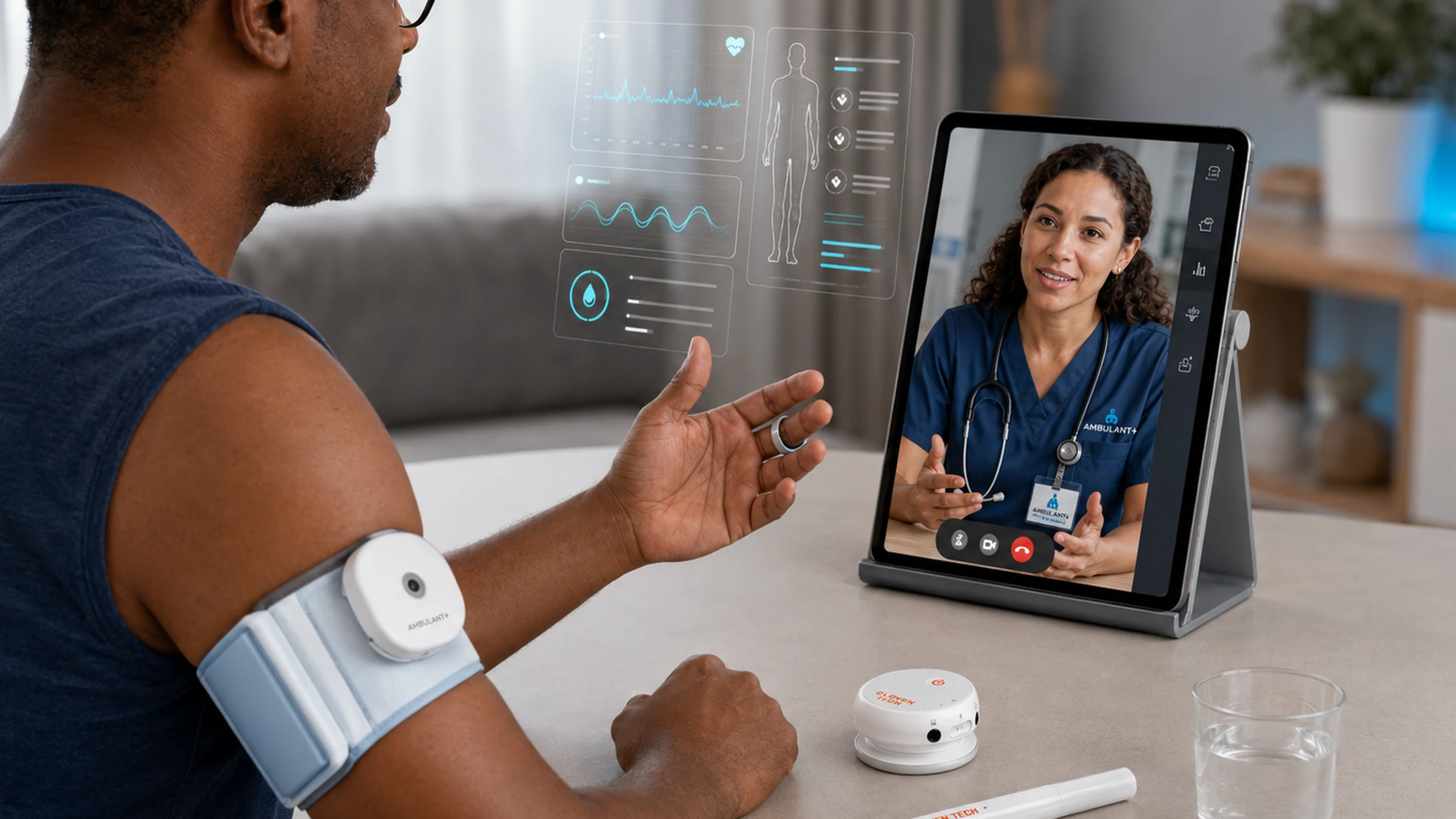
Telemedicine helped prove that some care conversations can happen remotely. Contactless Medicine goes further by adding connected medical devices, remote monitoring, home diagnostics, prescription fulfilment, clinical documentation and programme intelligence.
This creates a stronger care model for people who want to live outside major urban centres without being cut off from clinical oversight.
Remote consultation gives access to clinicians.
IoMT devices add objective health data.
MedReach brings home diagnostics and specimen workflows closer to the patient.
CarePort supports medicine fulfilment and last-mile delivery.
InsightCore helps organise risk, adherence and programme visibility.
The new geography of healthcare
The future of healthcare should not force every patient to live near a large hospital for every routine need. Hospitals must remain available for emergencies, complex care and procedures. But many reviews, monitoring tasks, follow-ups, medication checks and preventive interventions can be supported closer to where patients live.
That is the deeper promise of Ambulant+. It does not simply digitise a clinic visit. It helps create a distributed care model where people can live, work and recover with more independence.
A healthier life should not require a city postcode
If remote work can reduce forced migration to cities, remote healthcare must become part of the same social shift. People should not have to choose between economic opportunity, family support, lower living costs and healthcare access.
The most meaningful digital health systems will be the ones that support real lives: rural lives, working lives, elderly lives, family lives and chronic-care lives.
How can remote healthcare support rural living?
Remote healthcare can reduce unnecessary travel by supporting virtual consultation, remote monitoring, home diagnostics, medication delivery and structured follow-up where clinically appropriate.
Does Contactless Medicine replace hospitals?
No. Hospitals remain essential for emergencies, procedures and complex care. Contactless Medicine supports appropriate remote care, monitoring and follow-up outside hospital settings.
Why does remote work increase the need for remote healthcare?
As more people work outside major cities, they need healthcare infrastructure that can support them outside major urban centres too.