

The Hidden Cost Savings of Contactless Medicine
The consultation fee is only one part of what healthcare really costs.
Contactless Medicine can reduce hidden healthcare costs such as transport, petrol, taxi fares, parking, tolls, waiting time, missed work and delayed intervention.
The real cost of care is not only the doctor’s fee
When people compare healthcare costs, they often ask one question: how much is the consultation? But that is only the most visible part of the bill.
The real cost of healthcare includes transport, petrol, taxi fares, tolls, parking, time away from work, childcare, waiting-room delays, pharmacy queues, lab visits and the cost of depending on someone else to take you there.
For many patients, those hidden costs are the reason care is delayed until symptoms become harder and more expensive to treat.
Transport can quietly double the cost of a simple visit
A short consultation can become expensive when travel is added. A patient may pay for a taxi, fuel, parking, tolls or e-hailing. In rural and peri-urban areas, the cost may be even higher because the clinic, doctor, laboratory or pharmacy may be far from home.
For elderly patients or people with disabilities, the transport cost may also include a relative taking time off work or a caregiver rearranging the day.
Time is also money
Healthcare often consumes more time than patients expect. Travel to the clinic, check-in, waiting rooms, consultation time, pharmacy collection, laboratory queues and travel back home can turn a brief review into a half-day event.
This matters for workers, parents, carers, students, business owners and anyone who depends on someone else for transport. The harder it is to attend care, the easier it becomes to postpone it.
Early intervention is the biggest saving
The largest saving is not the taxi fare or the parking ticket. The largest saving is early intervention.
A patient whose blood pressure is reviewed early, whose medication adherence problem is detected early, whose respiratory symptoms are escalated early or whose diagnostic test is completed early may avoid a much more expensive complication later.
This is especially important for chronic disease, where small delays can accumulate into large clinical and financial consequences.
How Ambulant+ reduces friction around care
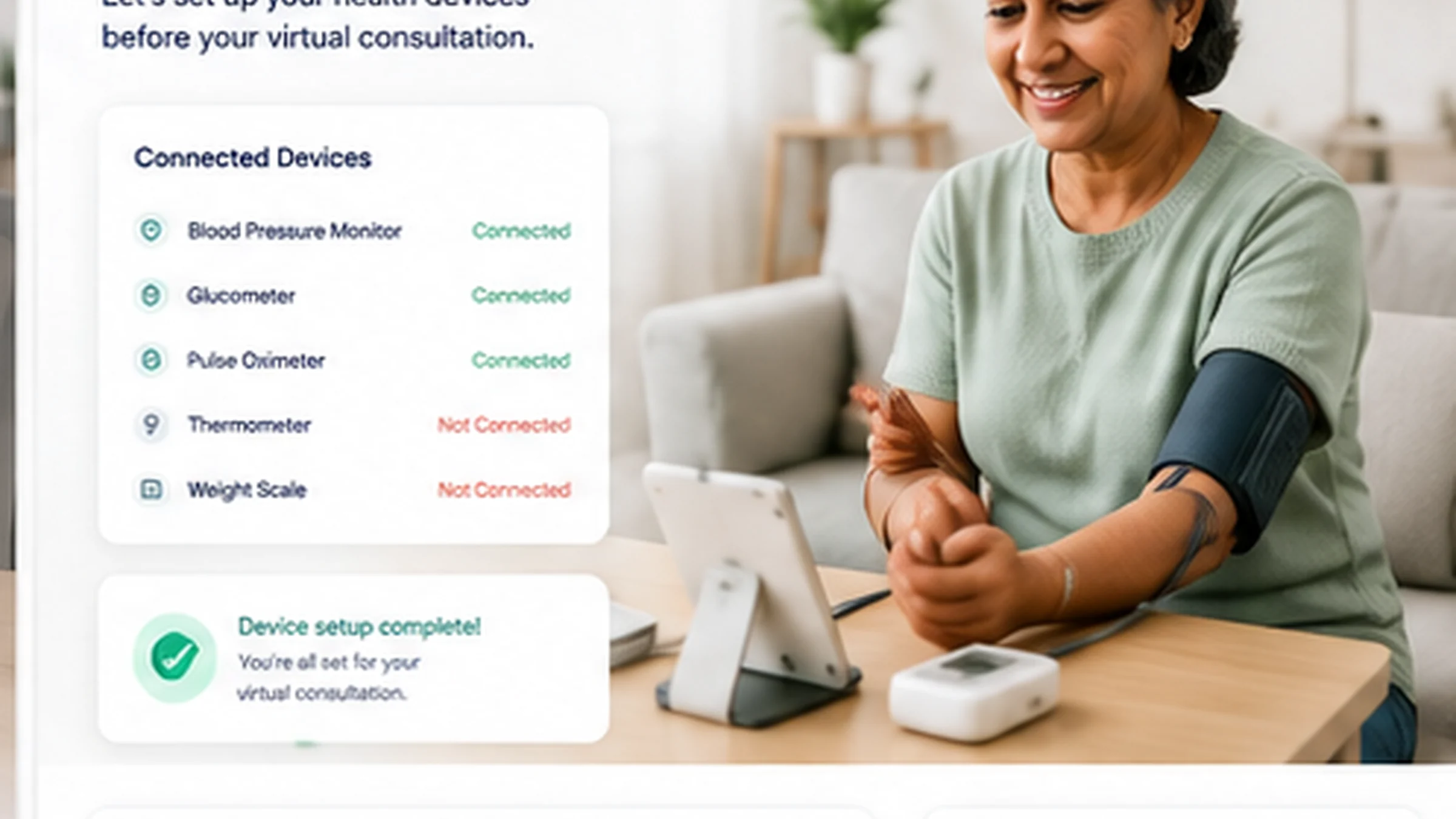
Ambulant+ is designed to reduce the friction around accessing care. Patients can use remote consultations, connected devices, MedReach home diagnostics and CarePort medicine fulfilment where appropriate.
The value is not only convenience. It is the possibility of making earlier, easier and more frequent care interactions possible.
Remote consultation can reduce unnecessary travel.
Connected devices can support remote vitals review.
MedReach can reduce diagnostic access barriers.
CarePort can reduce pharmacy and medication fulfilment barriers.
InsightCore can support programme visibility and earlier risk recognition.
How does Contactless Medicine save money?
It can reduce hidden costs such as transport, waiting time, missed work, pharmacy trips and delayed care, while supporting earlier intervention.
Is remote care always cheaper?
Not always, but it can reduce several indirect costs around care access and may support earlier intervention before complications become expensive.
Why is early intervention the biggest saving?
Because preventing deterioration or complications is often far less costly than treating advanced disease, hospital admission or emergency complications.