

Medical Aid Preventive Care and Remote Monitoring
How funders can move from reactive claims to earlier, measurable intervention.
Medical aids, HMOs and corporate sponsors can use remote monitoring, medication adherence, home diagnostics and care-pathway intelligence to support preventive care and reduce avoidable deterioration.
The payer case for prevention
Medical aids and HMOs understand a hard truth: complications are expensive. A patient with uncontrolled chronic disease may move from manageable outpatient care to hospital admission, surgery, dialysis escalation, amputation or intensive intervention.
Preventive care is therefore not only a member-benefit strategy. It is a risk-management strategy. The healthier and more engaged a member remains, the more sustainable the relationship becomes for both member and funder.
Where ordinary wellness programmes fail
Many wellness programmes reward activity but do not connect enough clinical context. A member may receive points for steps, but still miss blood pressure monitoring, prescription adherence, laboratory follow-up or clinical review.
A stronger preventive-care model should connect lifestyle signals, remote vitals, chronic-care monitoring, medication adherence, diagnostic readiness and claims context.
How Ambulant+ supports preventive care
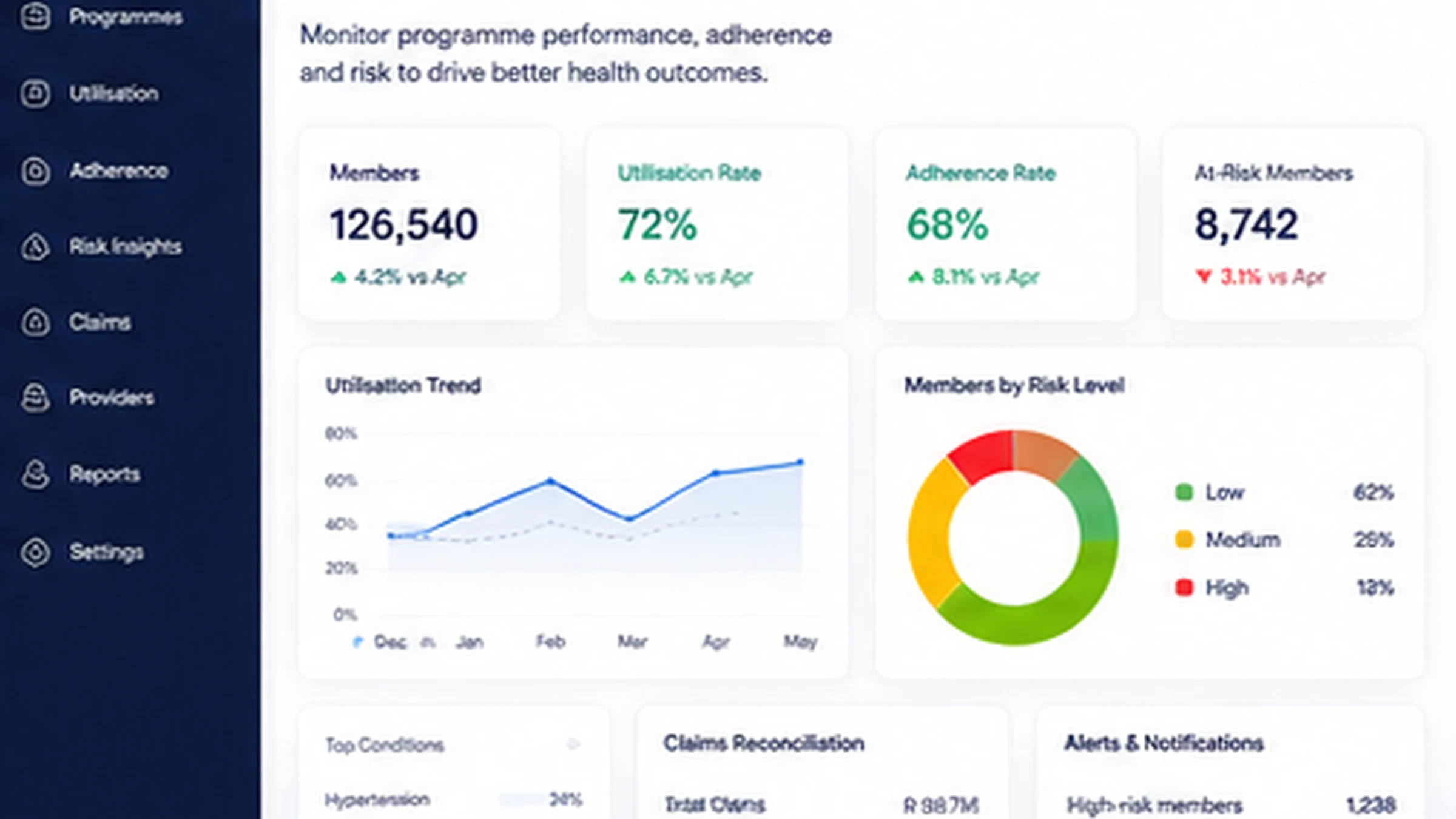
Ambulant+ brings together patient app access, clinician-led consultation, connected devices, MedReach diagnostics, CarePort fulfilment and InsightCore programme intelligence.
For medical aids, this creates a more operational preventive-care model. Members can be supported before deterioration becomes a hospital-cost event, and programme teams can see the signals needed for earlier action where consent and governance permit it.
Vitals spot checks and continuous remote monitoring signals.
Medication reminders and adherence scoring.
Home diagnostics and phlebotomy coordination.
CarePort pharmacy fulfilment and proof-of-delivery visibility.
Claims-ready consultation summaries where configured.
Reward-ready evidence for healthier behaviour and programme engagement.
Why fertility and family care matter
Preventive care is not limited to hypertension and diabetes. Fertility, antenatal planning, paediatric follow-up, women’s health and men’s health are also high-value benefit areas.
NexRing-supported longitudinal signals may contribute to fertility-awareness workflows where appropriate, while Ambulant+ can support virtual fertility consultation, multi-specialty review and shared attendance by partners in different locations.
The stronger funder proposition
The strongest Ambulant+ message to funders is not cheaper care. It is accountable prevention. Medical aids can support members with remote access, objective monitoring, diagnostics, fulfilment and measurable behaviour change.
That is the difference between paying claims after deterioration and funding a care pathway designed to prevent avoidable deterioration in the first place.
Why should medical aids pay for remote monitoring?
Remote monitoring can support earlier intervention, chronic-care continuity, adherence improvement and prevention of avoidable high-cost complications.
Can Ambulant+ support reward programmes?
Yes. Ambulant+ can support reward-ready signals such as adherence, vitals monitoring, activity context and programme engagement where permission and governance rules allow.
Is preventive care only for chronic disease?
No. Preventive care can also include fertility pathways, antenatal support, paediatric monitoring, lifestyle improvement, medication adherence and early diagnostic follow-up.