

How Medical Aids Can Reduce Avoidable Claims Through Early Intervention
The most expensive claims often begin as small risks that were not seen early enough.
Medical aids, HMOs and corporate sponsors can reduce avoidable claims by investing in early intervention, remote monitoring, home diagnostics, medication adherence, care navigation and preventive digital health infrastructure.
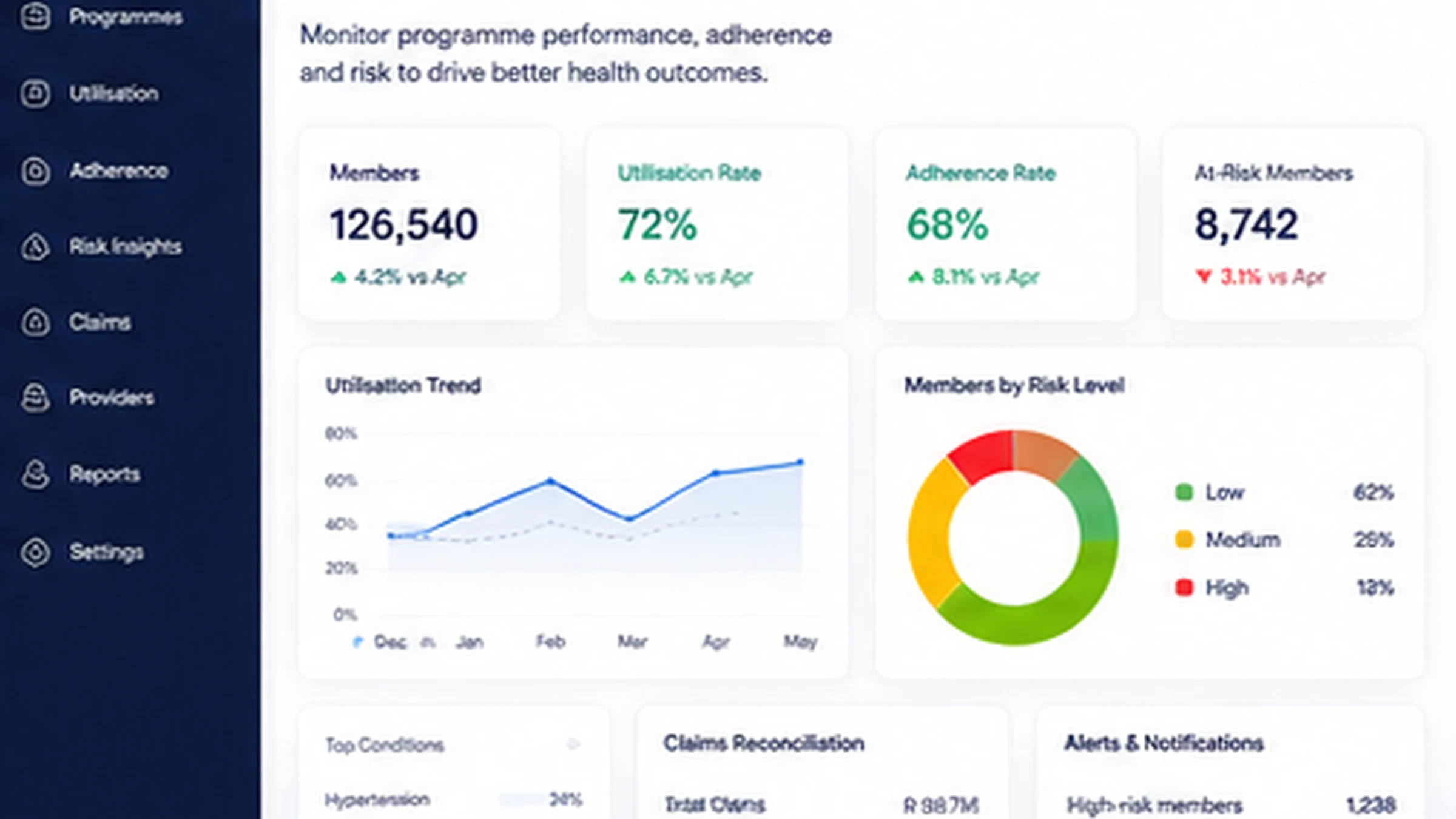
The expensive claim often starts as an invisible delay
Medical aids already understand the economics of late intervention. A routine consultation, remote monitoring programme, diagnostic test or medicine delivery may carry a cost, but preventable complications can become dramatically more expensive.
A member who misses follow-up, does not monitor vitals, stops medication, delays diagnostic testing or presents late may eventually require hospital admission, surgery, dialysis, amputation, intensive care or long rehabilitation.
The financial and human problem is not only the final claim. It is the missed opportunity before the claim became unavoidable.
Why access alone does not solve avoidable claims
Many members technically have covered benefits but still fail to use care early. The reason may be transport cost, time off work, long waiting-room delays, clinic distance, family responsibilities, mobility limitations or lack of awareness that symptoms are worsening.
Telemedicine helps reduce access friction, but video access alone may not be enough. The payer needs to know whether members are deteriorating, adhering to treatment, completing diagnostics, receiving medicine and following care plans.
That requires a connected model: remote care, objective data, fulfilment workflows and programme-level visibility.
The preventable pathways payers should target first
The strongest claims-reduction strategy is not to monitor everything equally. It is to identify high-cost, high-prevention pathways where early signals matter.
These include chronic diseases and care gaps where delayed action is known to drive expensive downstream outcomes.
Hypertension and cardiovascular risk.
Diabetes and medication adherence.
Respiratory conditions such as asthma and COPD.
Pregnancy-related remote monitoring and antenatal access support.
Elderly care, frailty and post-discharge follow-up.
Medication refill gaps and non-adherence.
Missed diagnostics, home phlebotomy needs and delayed lab results.
Members with transport barriers or poor clinic attendance.
Remote monitoring turns prevention into an operating model
Prevention should not be a slogan. It needs infrastructure. A payer cannot reduce avoidable claims effectively if risk is only discovered after the member becomes acutely unwell.
Remote monitoring gives care teams earlier signals. It can show blood pressure movement, oxygen saturation, heart rate, glucose where supported, sleep and activity signals, symptom patterns and adherence gaps.
When connected to clinician-led review, medicine fulfilment and diagnostics workflows, these signals become actionable rather than decorative.
Medication continuity is a claims-control issue
Many chronic-care failures are not caused by a lack of diagnosis. They are caused by interrupted treatment. A prescription may be issued, but the patient may not collect it, may not receive it, may take it incorrectly or may stop without review.
CarePort can support the operational layer: pharmacy fulfilment, dispatch, proof-of-delivery, reminders and adherence visibility where configured.
For a payer, this matters because missed medication today may become an avoidable admission tomorrow.
Home diagnostics can reduce missed-care friction
Diagnostic delay is another hidden driver of claims. Members may postpone blood tests or follow-up investigations because of distance, transport, time, fear of exposure or inconvenience.
MedReach can support home phlebotomy and laboratory workflow coordination where appropriate. That makes diagnostic completion easier, especially for chronic disease programmes, elderly members, high-risk members and people with limited mobility.
The value is not only convenience. It is earlier clinical visibility.
The Ambulant+ payer proposition
Ambulant+ gives medical aids, HMOs and sponsors a more complete preventive-care layer: patient access, clinician-led virtual care, connected medical devices, MedReach diagnostics, CarePort medication fulfilment and InsightCore programme intelligence.
Onboarded medical aids can gain visibility into Ambulant+ members who grant permission, promote appropriate products or services, support preventive programmes and strengthen member engagement inside a governed care ecosystem.
The strategic message is simple: keep members healthier, detect risk earlier, reduce avoidable deterioration and make preventive care easier to use.
Can remote monitoring reduce medical aid claims?
Remote monitoring can support earlier detection, better adherence and faster intervention, which may reduce avoidable deterioration and some high-cost claims. It should be used as part of a clinically governed care programme.
Why should medical aids pay for preventive care?
Preventive care can be less costly than complications such as avoidable hospital admissions, advanced chronic disease, surgery or long rehabilitation.
How does Ambulant+ support medical aids?
Ambulant+ supports remote care, connected devices, home diagnostics, medication fulfilment, adherence workflows and programme intelligence for medical aids, HMOs and sponsors.