

Remote Care Saves More Than Travel Time
When healthcare takes less of the day, patients are more likely to seek care early.
Remote care can save travel time, waiting-room time and caregiver time, making it easier for patients to attend consultations, complete follow-up and stay engaged in care.
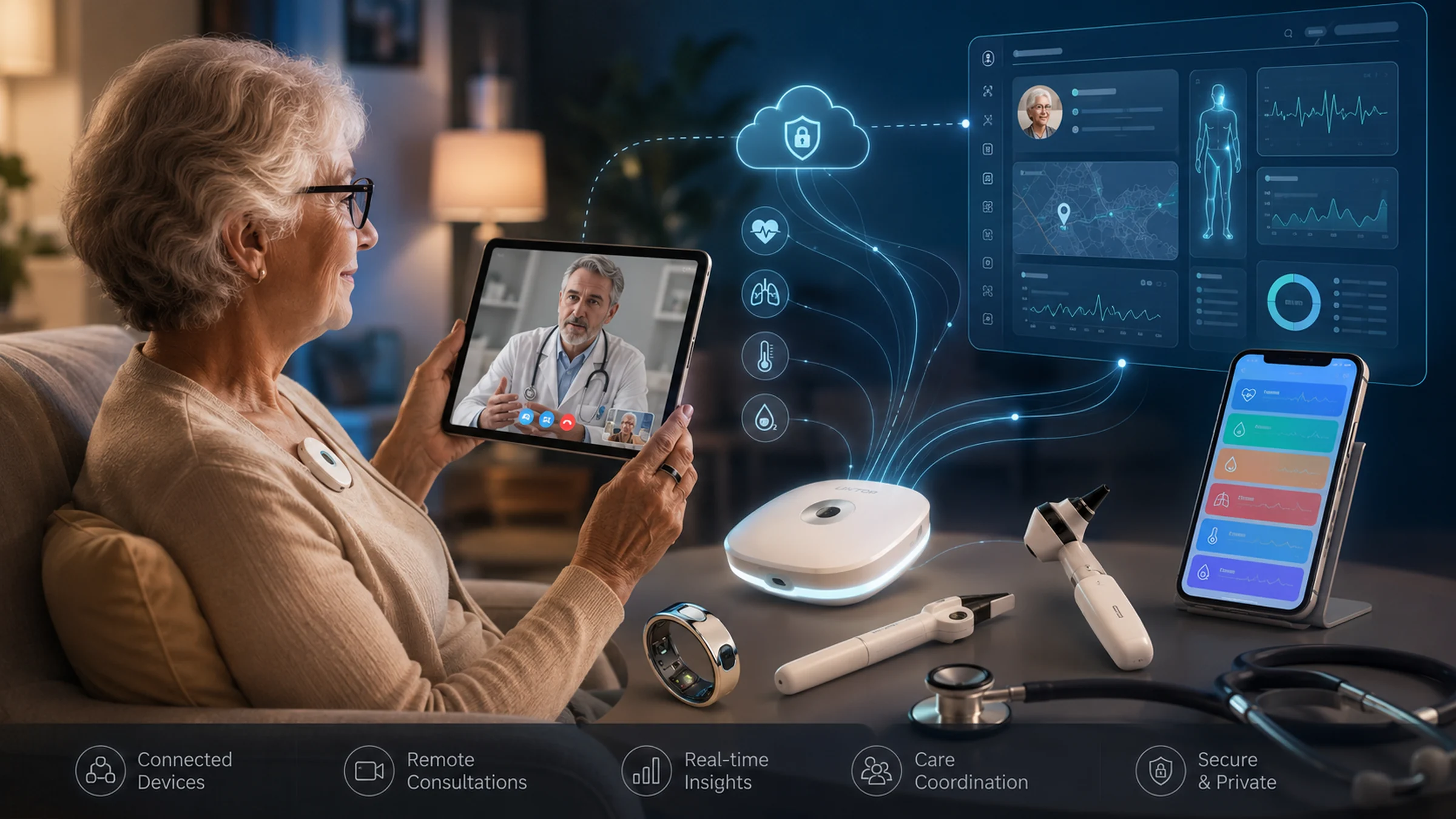
A fifteen-minute consultation can consume half a day
Many healthcare visits are short on paper but long in real life. A patient may spend time arranging transport, travelling, parking, checking in, waiting, consulting, collecting medicine and returning home.
For someone with a busy job, children, elderly parents, transport dependency or mobility challenges, that time burden can be enough to delay care.
The waiting room is not neutral
Waiting rooms can be uncomfortable, stressful and inefficient. Patients may sit while symptoms worsen, while work is missed or while dependants wait elsewhere.
For patients who need frequent reviews, repeated waiting-room time becomes a major barrier to continuity.
Time pressure causes missed appointments
Patients do not always miss appointments because they do not care. Many miss appointments because life is complicated. Transport fails. Work runs late. A child needs attention. A lift is no longer available. The clinic is far away.
Remote care can reduce these failure points by allowing appropriate consultations, monitoring and follow-up to happen from home, work or another private location.
Time saved can become better care
The time saved through Contactless Medicine should not be seen only as convenience. It can improve care behaviour. A patient who can check in more easily may report symptoms earlier, complete follow-up more reliably and remain more engaged in a treatment plan.
For chronic disease, that extra engagement can be clinically meaningful.
The complete time-saving pathway
A complete time-saving pathway includes more than a video call. It includes remote booking, device-supported review, home diagnostics, prescription fulfilment, medicine delivery and clear follow-up documentation.
This is where Ambulant+ becomes more than an online doctor interface. It becomes a care-access system.
How does remote care save time?
Remote care can reduce travel time, waiting-room time, pharmacy trips and dependency on others for transport when the care need is suitable for remote management.
Can remote care improve appointment attendance?
It can help by reducing common barriers such as travel, waiting time, transport dependency and scheduling disruption.
Does saving time matter clinically?
Yes. Easier access can encourage earlier reporting, better follow-up and improved engagement with care plans.