

Remote Patient Monitoring for Hypertension: Beyond Blood Pressure Readings
High blood pressure management should include trend, behaviour, adherence and early review.
Hypertension care needs more than isolated blood pressure readings. Remote patient monitoring can combine BP trends, medication adherence, sleep, lifestyle signals and clinician-led review to support earlier intervention and better chronic-care outcomes.
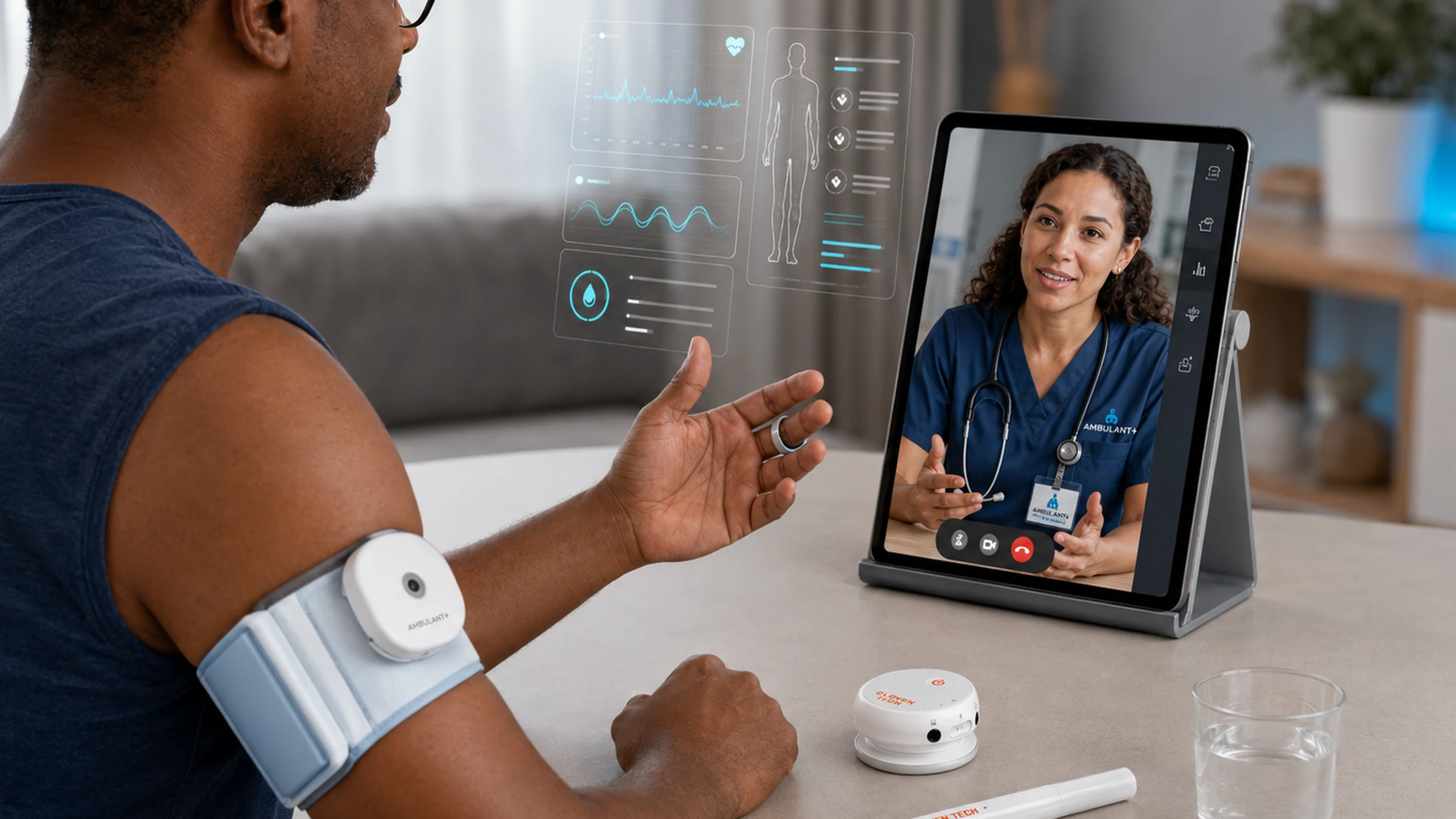
A blood pressure reading is useful, but it is not the whole story
Hypertension is one of the most important chronic conditions for preventive healthcare. It is common, often silent and strongly linked to severe complications when poorly controlled.
But hypertension management should not depend only on one reading taken during a clinic visit. A single measurement can be affected by stress, timing, medication schedule, sleep, activity, caffeine, pain, illness or measurement technique.
Remote monitoring makes hypertension care more useful because it helps clinicians and programmes see patterns over time.
Why hypertension is a payer priority
For medical aids, HMOs and employers, hypertension is a prevention priority because late complications are expensive and often life-changing. Poorly controlled blood pressure can contribute to stroke, heart failure, kidney disease, cardiac events and other serious outcomes.
Routine consultations and monitoring may cost money, but uncontrolled disease costs far more. This is why remote hypertension monitoring should be seen as a risk-management tool, not merely a convenience feature.
When members can monitor more regularly from home, care teams have a better chance of identifying deterioration before it becomes an emergency.
What hypertension programmes should monitor beyond BP
Blood pressure remains central, but better chronic care looks at the wider context. A patient may have high readings because medication is not being taken correctly, sleep is poor, stress is rising, diet has changed, or treatment needs review.
A remote-care programme should make these patterns easier to detect and discuss.
Blood pressure trends over time.
Heart rate and other relevant remote vitals.
Medication adherence and refill continuity.
Sleep routine, activity and recovery signals where available.
Symptoms such as headache, dizziness, chest discomfort or breathlessness.
Follow-up timing after new medication or dosage changes.
Escalation triggers for concerning readings or symptoms.
Medication adherence is often the missing variable
Hypertension treatment can fail even when the prescription is clinically appropriate. The patient may not collect the medicine, may forget doses, may stop after side effects, may misunderstand instructions or may run out before review.
This is why adherence visibility matters. CarePort-supported medication fulfilment, reminders, eRx workflows and proof-of-delivery can help close the gap between prescription and actual treatment.
For clinicians and payers, adherence context can prevent false conclusions. A medicine may appear ineffective when the real problem is inconsistent use.
Remote monitoring should support clinician judgement
Remote monitoring is not about replacing doctors with dashboards. It is about giving clinicians better information earlier.
A clinician reviewing hypertension remotely can combine patient symptoms, BP trends, medication history, adherence signals and wider health context. That makes the consultation more precise than a video-only discussion.
When readings are concerning, the right system should support escalation rather than delay care.
The Ambulant+ hypertension opportunity
Ambulant+ can support hypertension care through patient access, remote vitals, supported connected-device workflows, clinician review, CarePort medicine continuity and InsightCore programme visibility.
For patients, this means fewer unnecessary trips and more structured follow-up. For medical aids and employers, it means better prevention intelligence. For clinicians, it means more context for decision-making.
The result is a stronger hypertension care pathway: more convenient than traditional monitoring, and more clinically useful than ordinary telemedicine alone.
Can hypertension be monitored remotely?
Yes. Suitable hypertension care can include remote blood pressure monitoring, symptom review, adherence support and clinician-led virtual follow-up. Emergency symptoms or dangerous readings still require urgent care.
Why is one blood pressure reading not enough?
One reading may be affected by timing, stress, medication schedule, sleep, pain or technique. Trends over time provide more useful clinical context.
How can medical aids benefit from hypertension monitoring?
Earlier monitoring and intervention may help reduce avoidable complications, improve member experience and support preventive care programmes.